DeepMind and Singapore Fine-Tune Gemma to Stop Scams


DeepMind and Singapore's Ministry of Digital Development and Information have quietly shipped something practical: a Gemma model tuned to catch scams on-device. No cloud, no data leaving the phone. The announcement, posted on DeepMind's blog, targets a problem that harms millions. That's the hook — safety AI that lives where the threat does.

Scam detection is suddenly a hot AI battleground. But this one is different: it's on-device, meaning the model runs locally. That cuts latency, protects privacy, and makes it harder for scammers to snoop on the very tool built to stop them. The collaboration with MDDI also signals governments want real defenses, not just chatbots.
What does on-device detection mean for users?
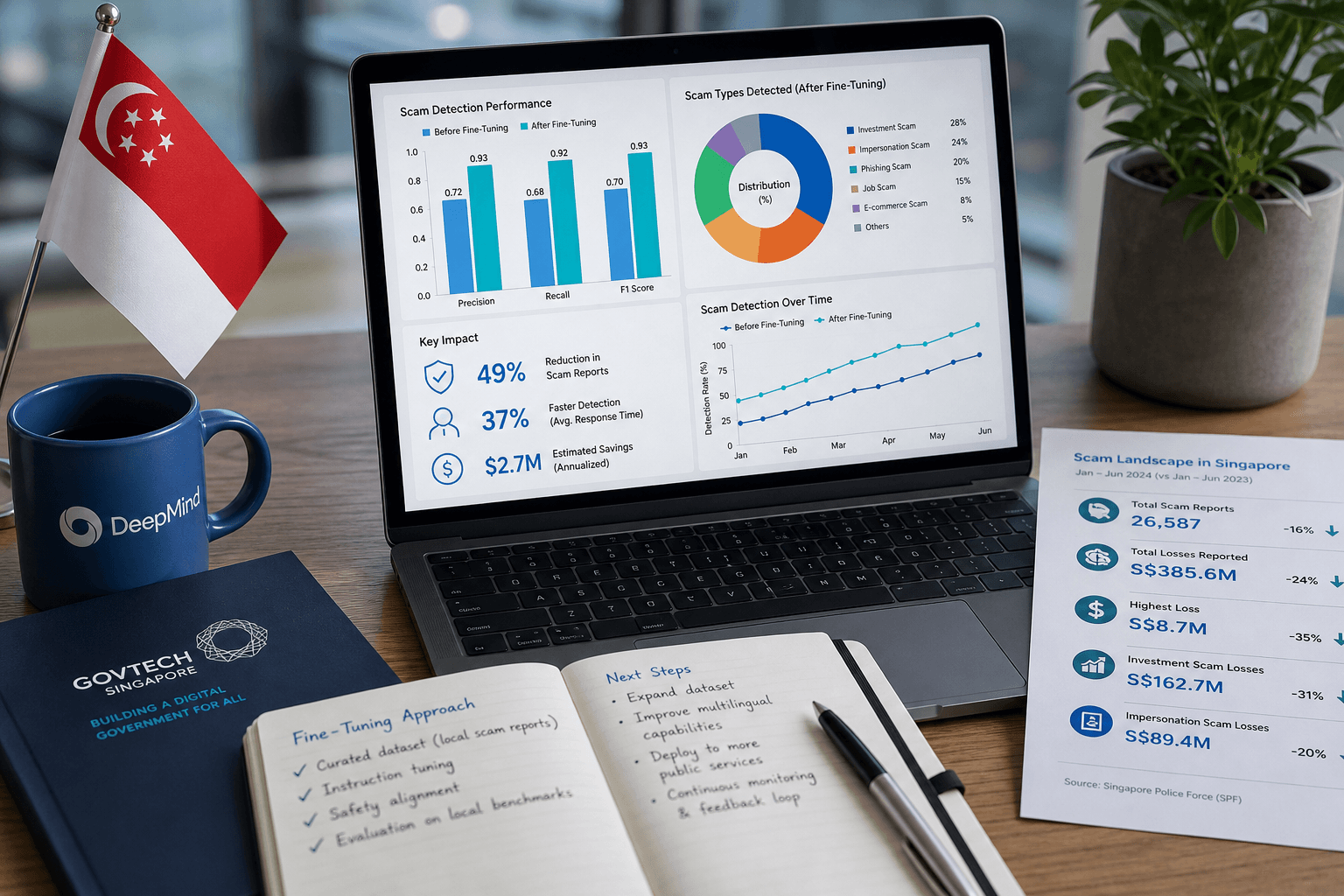
It means scam warnings without an internet round-trip. A prompt like "Is this message a scam?" never leaves your pocket. The fine-tuned Gemma model makes that call in milliseconds. For privacy-conscious users, that's the whole selling point. And for carriers and banks, it's a new layer of defense against social engineering.
Why is this a big deal for the AI release cycle?
Most AI headlines this week are vague — Meta and Microsoft teased models we've seen before. This is different. It's a specific, tested use case. A small model, fine-tuned for a narrow job, deployed where it matters. That's the pattern the industry is moving toward, and DeepMind got there with a government partner. Watch for more on-device safety models in the coming months.