Microsoft Maia 300 Chip Cuts Nvidia Dependence

Microsoft is rolling out its Maia 300 AI chip, a second-generation in-house processor designed to lessen the company's reliance on Nvidia GPUs. The move matters because it shifts leverage in the AI hardware market and could pressure Nvidia's dominant pricing. Microsoft hasn't released full specs yet, but the rollout signals a major infrastructure bet.
What does Maia 300 mean for Nvidia?
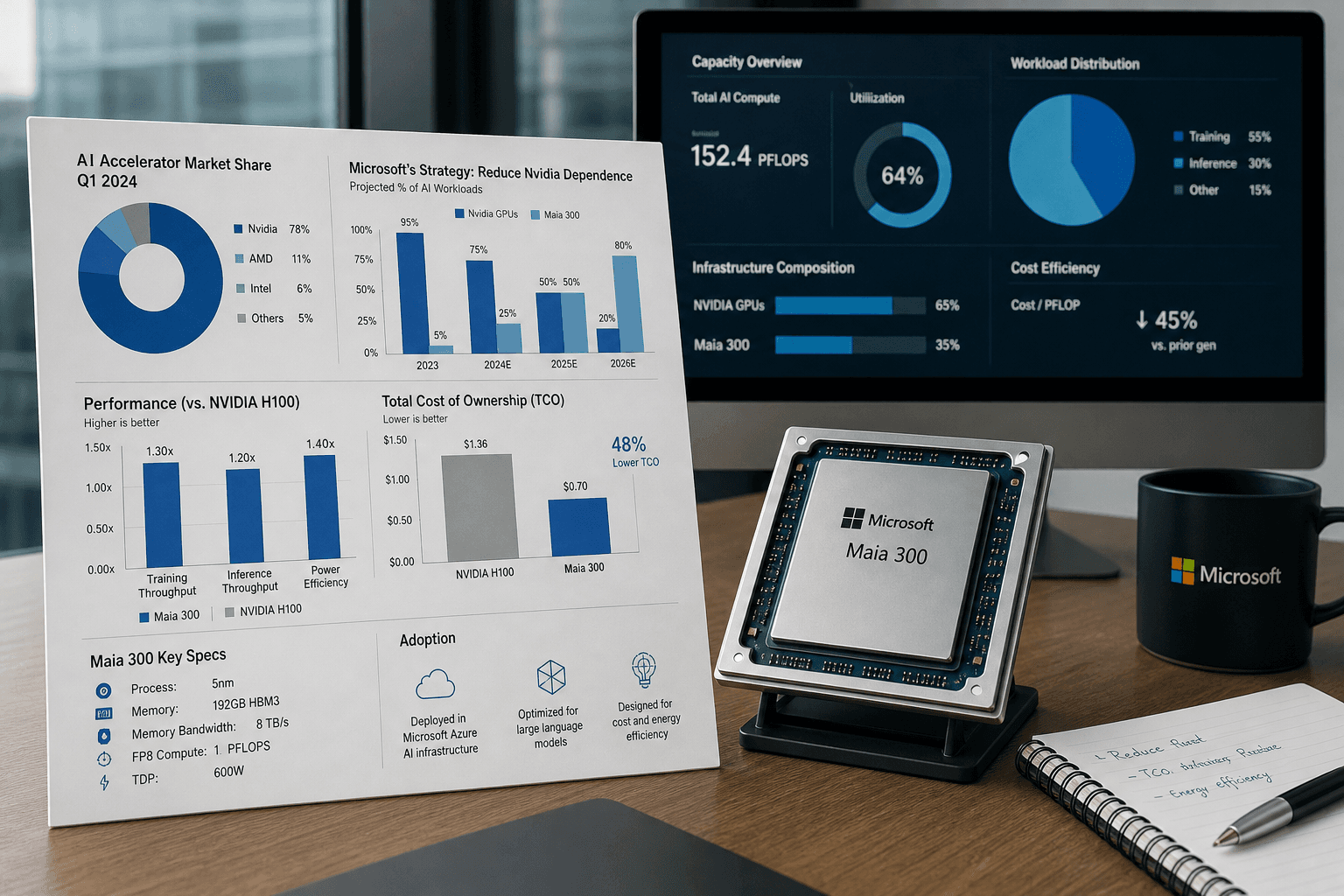
Microsoft's new chip directly challenges the assumption that every AI company needs Nvidia. Maia 300 is built for training and inference workloads inside Microsoft's data centers. If it performs as positioned, it could reduce the number of Nvidia chips Microsoft needs to buy. That's a big deal for a company running OpenAI's models at scale. The chip also puts Microsoft in a stronger negotiating position with Nvidia, even if it doesn't fully replace GPUs anytime soon.
Where does Maia 300 fit in Microsoft's AI plans?
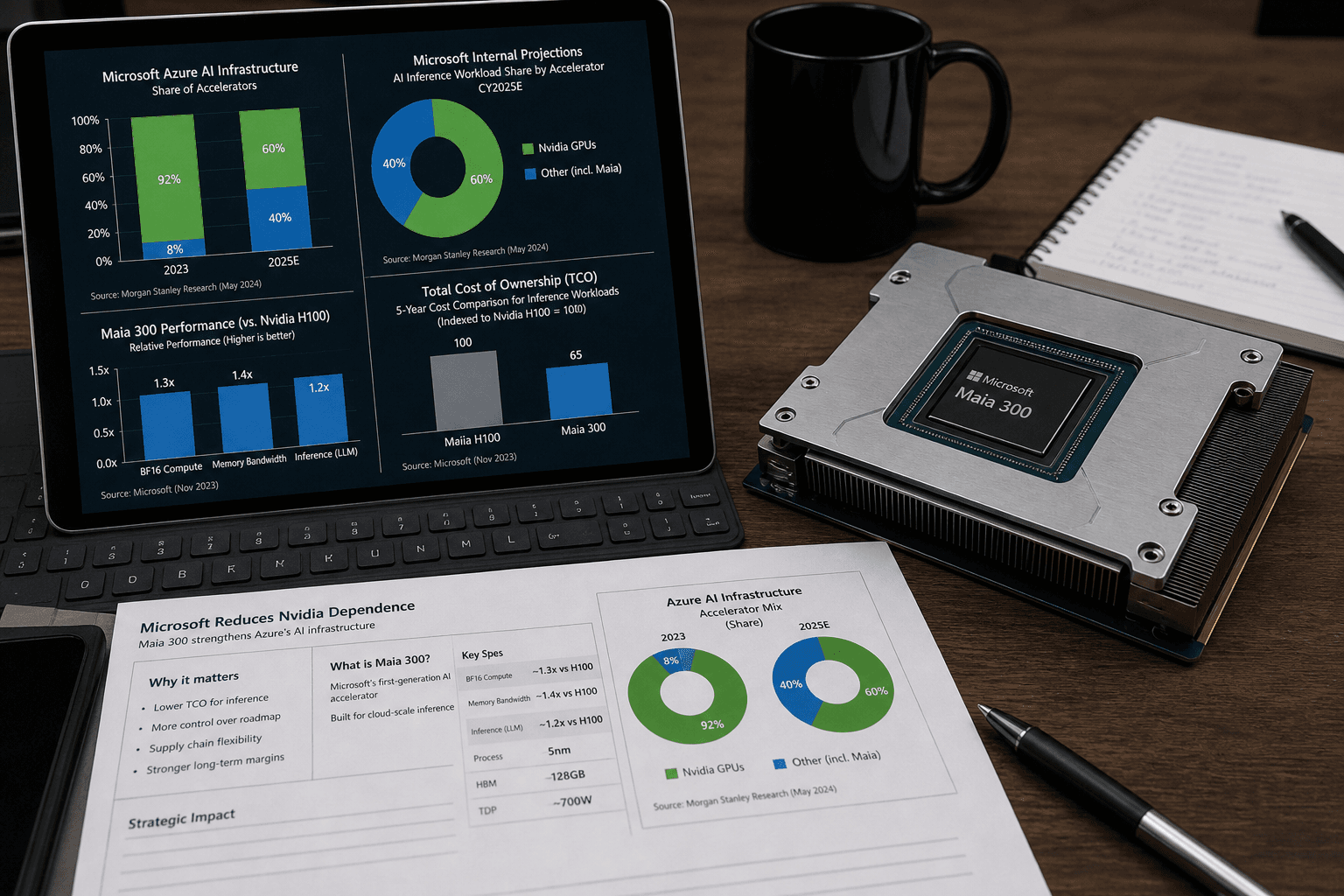
Microsoft has been designing custom silicon for years. The Maia line is its answer to the cost and supply constraints of Nvidia's high-end accelerators. The 300-series rollout comes alongside other Azure infrastructure investments. Microsoft hasn't announced public availability or benchmark numbers, so enterprise customers will have to wait for real-world performance data. Still, the direction is clear: Microsoft wants more control over its AI hardware stack.
This looks like a strategic hedge as much as a technical upgrade. The community reads it as Microsoft preparing for a future where Nvidia doesn't set all the rules. But until Microsoft publishes specs or independent benchmarks, treat performance claims as directional, not proven.